Early years

The Early Years Foundation Stage at Silfield Oak- foundations for flourishing
Children who attend Silfield Oak Primary have an exceptional early years education through our Foundations for Flourishing curriculum, giving them the strong foundations to thrive in KS1 and beyond. We are committed to equity and excellence. With a high-quality and evidence informed environment, ambitious curriculum, high spec facilities and reading at the heart, every child will have the opportunity to flourish. We are delighted that 96.4%, 100 % of our disadvantaged pupils, reached a good level of development at the end of 2026!
Our approach to Early Years places high value on learning, professional expertise and valuing the uniqueness of our children.
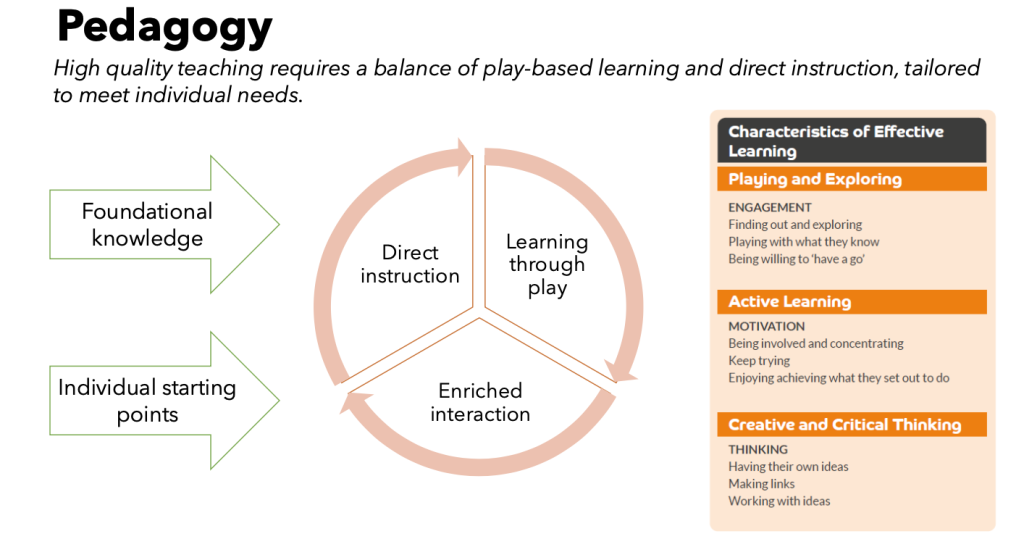
Our curriculum clearly identifies the foundational knowledge and skills that children will learn to build upon in year 1. The children are given high-quality opportunities to practise using foundational knowledge and skills so that they become fluent and it builds automaticity. With a carefully planned balance between high skilled, assessment informed play, quality first direct teaching and guided practice our curriculum promotes the development of the ‘whole’ child.
The Early Years Foundation Stage
The Early Years Foundation Stage (EYFS) covers from birth until the age of 5 years. There are 4 key principles in the EYFS:-
- The Unique Child – each child is valued as an individual learner and we recognise that children learn at different paces and in different ways. We support them to be resilient, capable, confident and self-assured individuals.
- Positive Relationships – relationships between adults and children are vital in securing progress. We are sensitive to children’s needs, feelings and interests. We praise their efforts and encourage them to be independent.
- Enabling Environments – we pride ourselves on our stimulating resources, both indoors and outside. We offer rich learning opportunities through play and playful teaching. Children are encouraged to take and manage risks, explore and discover.
- Learning and Development – the EYFS Curriculum is split into 7 areas of learning :-
- Personal, Social and Emotional Development
- Communication and Language
- Physical Development
- Literacy
- Mathematics
- Understanding the World
- Expressive Arts and Design
All the 7 areas are inter-connected and are considered equally important to ensure the holistic development of your child.
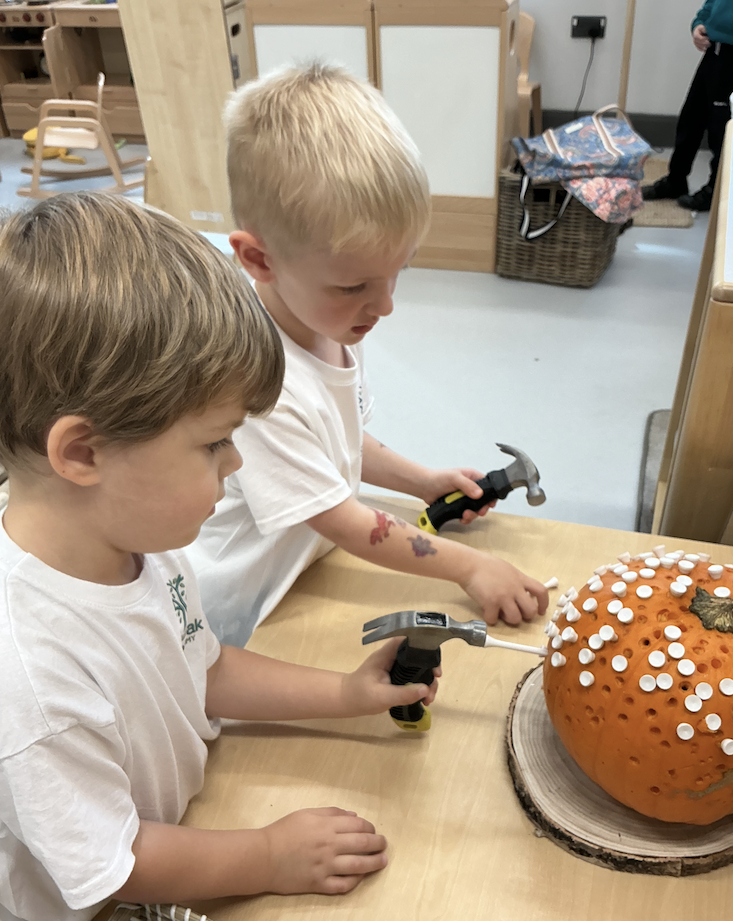
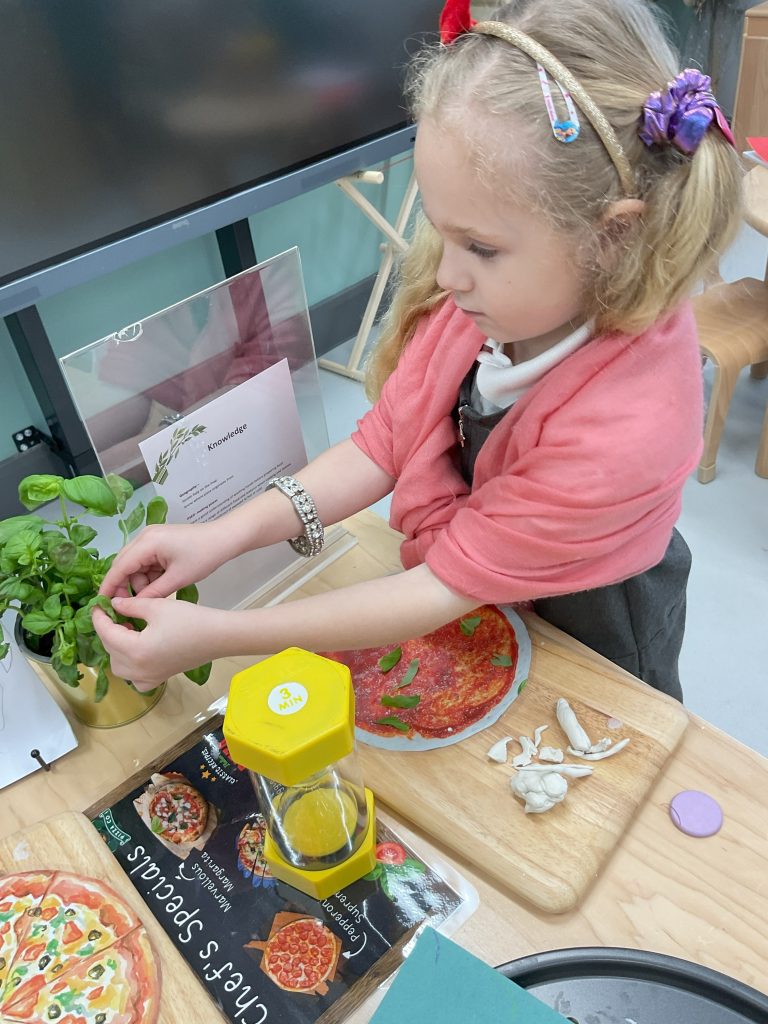
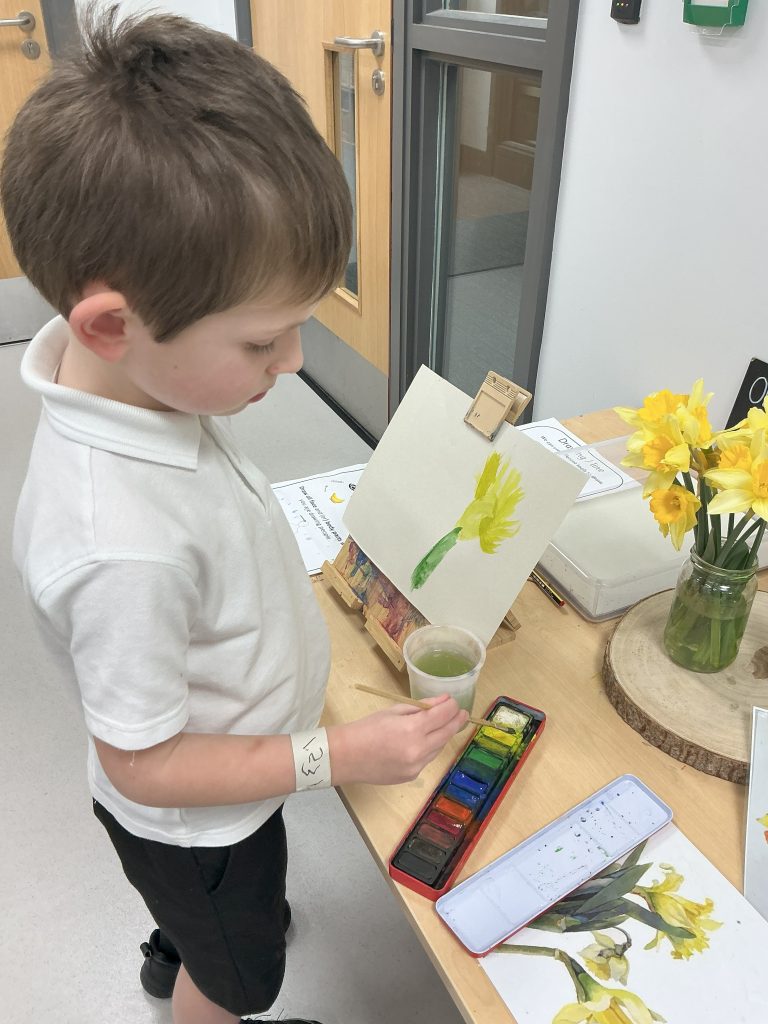
Within the EYFS, children learn through play along with a balance of direct teaching and guided group practice. Children have lots of time for child-initiated learning which is then supported by adults in the setting.
The children have access to high quality and evidence informed free-flow both inside and outside. All areas of the curriculum are meticulously planned for with high quality resources carefully selected to ensure all children make progress. Play is always purposeful to ensure that children are practising, embedding and applying their learning and skills. We invest heavily in research informed training and CPD for our staff and they are supported with implementation of this in the classroom.
Outdoor provision
Promoting our thread of exercising muscles and minds outdoor learning is important to us at Silfield Oak. We value and embrace the outdoor environment, ring-fencing time for children to have protected time outside throughout the school day. Our outdoor provision promotes physical development and oracy, alongside opportunities for children to practise, embed and apply new and acquired learning and vocabulary in different contexts.
Reception Themes
| Autumn 1 | Autumn 2 | Spring 1 | Spring 2 | Summer 1 | Summer 2 | |
| General Themes | Me, us and belonging (friendship) Tiger who came to Tea Harvest Pumpkin Patch Diwali | celebrating differences Autumn Let’s celebrate! | We are artists! Out and about Pizzas! | Internet safety Changes around us Down on the farm | Saving the planet! Wheels, engines and cities | Toys Land and sea animals People who help us Dinosaurs |
| Astronomical Seasonal focus | Autumn | Autumn | Winter | Spring | Summer | Summer |
| Silfield Value Focus | Belonging | Kindness | Curiosity | Curiosity | Kindness | Belonging |
Reception Literature Spine
We carefully plan out the literature spine for each year group to ensure that the children engage and listen to a wide range of stories and rhymes with a rich diet of language and vocabulary. The diverse spine reflects all of the protected characteristics and offers a mirror and a window to the world.
Starting school at Silfield Oak
Reception information meeting
How can I prepare my child ready for starting Reception?
Your child will have lots of new activities and routines to
get used to when they start school. There are some things they’ll need to do more independently than they might have before.
Research shows that a child’s relationship with their parents is the most important factor in their development, and there’s a lot you can do at home.
When your child is at home with you or another caregiver, you can practise as a family with fun activities.
Some of these skills take time to master, so it’s good to introduce them gradually
in your daily routine.
We have some useful guides to support your child starting school reading to flourish.
Potty Training
Potty training is an important milestone in your child’s development. We understand that all children develop at their own pace, but research shows it’s best for your child’s bowel and bladder health to stop using nappies, including reusable nappies, pull-ups and training pants, between 18 and 30 months.
It’s really important that children are out of all nappies well in advance of starting Reception year in school. The only exception should be children with a diagnosed medical need, such as a bladder or bowel condition. Being out of nappies not only helps children to feel confident, healthy and part of the group, it also means teachers can spend more time teaching and supporting children’s development in other ways.
The Potty Training Guide – Starting Reception
Toothbrushing
The Children’s Toothbrushing Guide – Starting Reception
If there is anything you need support with please reach out to your child’s pre-school setting or get in touch with the school.
Rhythm of the day